
Running trucks across state lines sounds simple on paper, but the paperwork behind it often tells a different story. One of the most commonly misunderstood requirements for interstate trucking is the International Registration Plan, usually shortened to IRP. In New Jersey, this system affects owner-operators, fleet managers, and small transport businesses alike. Understanding how it works can save time, reduce confusion, and help avoid compliance issues that show up when you least expect them.
Understanding the International Registration Plan
The International Registration Plan is a registration agreement between U.S. states, the District of Columbia, and Canadian provinces. It allows commercial vehicles to operate across multiple jurisdictions using one registration plate instead of registering separately in every state.
Under IRP, registration fees are divided, or apportioned, based on the miles a vehicle travels in each jurisdiction. This system exists to make interstate travel more manageable while ensuring that each state receives its fair share of registration revenue.
What Are Apportioned Plates?
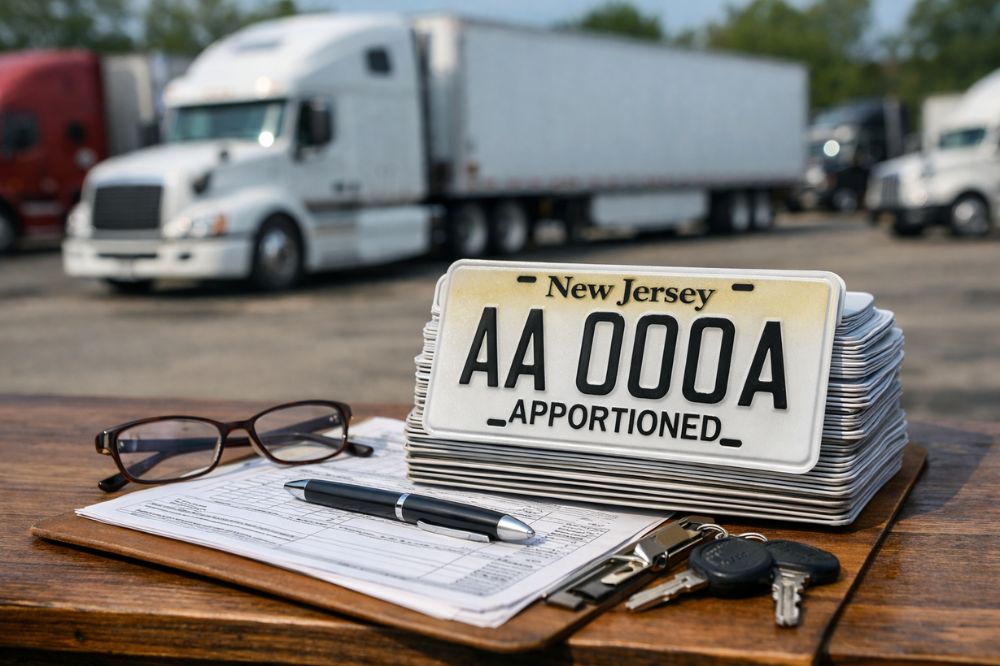
Apportioned Plates are special license plates issued under the IRP program. These plates indicate that a vehicle is registered to travel legally across multiple states.
They are typically used by vehicles that:
- Travel in two or more jurisdictions
- Are used for business purposes
- Meet specific weight requirements
In New Jersey, vehicles registered under IRP receive plates that look similar to standard commercial plates but carry IRP identification.
Who Needs Apportioned Plates NJ?
Not every commercial vehicle needs IRP registration. Eligibility depends on how and where the vehicle operates.
Vehicles that usually qualify
- Power units with a gross vehicle weight over 26,000 pounds
- Vehicles with three or more axles, regardless of weight
- Units operating across state lines for commercial purposes
Vehicles that may not need IRP
- Vehicles operating only within New Jersey
- Farm-plated vehicles used under certain conditions
- Recreational vehicles not used for business
Understanding whether Apportioned Plates NJ apply to your vehicle depends heavily on usage patterns, not just vehicle size.
How IRP Registration Works in New Jersey
New Jersey acts as the base jurisdiction for carriers based in the state. This means registration, renewals, and reporting are handled through New Jersey authorities, even though travel may occur elsewhere.
The general process includes:
- Establishing a New Jersey base of operations
- Providing distance records for each jurisdiction
- Paying apportioned registration fees
Once approved, the vehicle receives IRP credentials allowing travel across participating states.
Key Documents Required
Applying for IRP registration involves more than filling out a form. Several records must be prepared and maintained.
Commonly required documents include:
- Proof of business location in New Jersey
- Vehicle ownership or lease agreements
- Mileage records by jurisdiction
- Federal DOT information
Incomplete or inaccurate records can delay approval or cause issues during audits.
Fee Structure Explained
IRP fees are calculated based on how far a vehicle travels in each jurisdiction. This means costs can vary significantly from one carrier to another.
| Factor | Why It Matters |
| Total miles traveled | Determines overall fee allocation |
| Miles per state | Affects how fees are divided |
| Vehicle weight | Influences base registration cost |
| Number of jurisdictions | Impacts reporting complexity |
This system may feel complicated at first, but it reflects actual road usage rather than flat fees.
Record Keeping and Compliance
One of the most overlooked parts of IRP compliance is distance reporting. Accurate records are not optional.
Good records should include:
- Trip dates
- Origin and destination
- Routes traveled
- Miles by state
Poor documentation can lead to penalties during audits, even if registration itself is valid.
Common record mistakes
- Estimating miles instead of tracking them
- Missing trip entries
- Inconsistent reporting formats
Consistency matters more than perfection.
Renewals and Updates
IRP registration is not permanent. It must be renewed annually, and updates are required when vehicle information changes.
Situations that require updates include:
- Adding or removing vehicles
- Changing business address
- Adjusting declared mileage
Staying current avoids last-minute stress and unexpected downtime.
Where KN-Multiservices Fits In
For many operators, understanding IRP rules is harder than driving the truck itself. Businesses like KN-Multiservices often work behind the scenes, helping carriers interpret requirements, prepare documentation, and stay aligned with New Jersey regulations without guesswork.
Final Thoughts
IRP and Apportioned Plates are not just administrative tasks; they shape how interstate trucking operates on a daily basis. In New Jersey, knowing when IRP applies, how fees are calculated, and what records are required can make compliance feel manageable instead of overwhelming. With the right understanding and consistent record keeping, IRP becomes less of a hurdle and more of a system that simply runs in the background.