
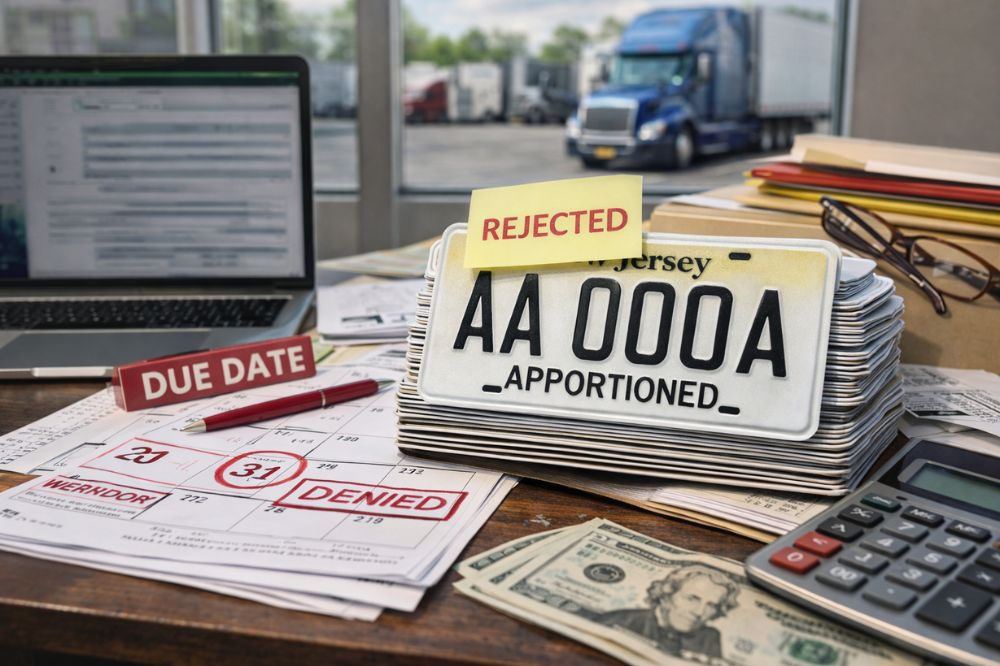
Renewing commercial vehicle registration under the International Registration Plan is something many fleet operators deal with every year. The process looks simple on paper, but in practice it can become confusing if details are missed. Small mistakes in paperwork, reporting, or documentation can slow the process and sometimes even delay approval. Businesses that operate vehicles across state lines rely heavily on proper registration, so avoiding common errors becomes important. Many operators in New Jersey realize that renewal is not just a formality but a process that requires careful attention to records and compliance.
Commercial vehicles that travel between states must be registered under the International Registration Plan. This system allows fees to be distributed between states depending on how much distance a vehicle travels in each one. Because of this structure, renewal requires accurate records, updated documentation, and clear reporting of mileage. Even a small error can affect the calculation of fees or slow down the approval process.
Many fleet operators treat the renewal as routine, but it involves multiple details. These include business records, insurance verification, mileage logs, and fleet updates. When any of these items are incomplete or outdated, the renewal request may not move forward smoothly.
In New Jersey, businesses operating interstate commercial vehicles must ensure that their Apportioned Plates (IRP) information stays updated every year. The renewal process usually involves submitting mileage information, confirming business details, and verifying vehicle records. Although the steps themselves are not very complicated, delays often happen when paperwork is incomplete or when the information does not match official records.
Organizations that assist with registration services, such as KN-Multiservices, often notice that most problems come from simple oversights rather than complicated rules. When records are organized and information is checked carefully, the process becomes far easier to complete.
Fleet operators sometimes repeat the same errors during the renewal period. These mistakes may look small at first, but they can create delays that affect business operations.
Common issues often include:
Understanding these problems in advance helps operators prepare better before submitting renewal requests.
One of the most frequent mistakes happens when businesses delay the renewal process. Because companies focus on daily operations, paperwork sometimes gets pushed aside until the last moment.
When renewal begins too late, several issues may arise:
Starting early allows businesses to review records, gather documents, and fix mistakes before the deadline approaches.
Mileage reporting plays a major role in the registration system because fees are based on how far a vehicle travels in each jurisdiction. When the reported distance is inaccurate, it may trigger verification checks or adjustments.
Some mileage errors include:
To avoid these issues, it helps to maintain detailed mileage records throughout the year rather than trying to recreate them during renewal time.
Another common problem is missing paperwork. Even when most documents are correct, one missing page can stop the entire application process.
Examples of documentation issues include:
Sometimes businesses reuse older documents without realizing that updated versions are required for the current renewal period. Checking each document carefully before submission can prevent unnecessary delays.
Business information can change during the year. Companies may move offices, change contact numbers, or update ownership structures. When these updates are not reflected in registration records, the renewal request may need additional verification.
Important information that should always remain current includes:
Ensuring that these details match official records helps avoid confusion during the renewal process.
Apportioned Plates renewal or approval also depends on whether vehicles meet regulatory requirements. Registration alone is not enough if the vehicle does not comply with other rules.
Some common compliance factors include:
When compliance documents are missing or outdated, the renewal request may remain on hold until the issue is resolved.
Fleet operations often change during the year. Businesses may purchase new trucks, sell older vehicles, or add leased units. If these changes are not recorded properly, the renewal application may contain outdated information.
Typical fleet related mistakes include:
Keeping fleet records updated throughout the year makes renewal far less complicated when the time arrives.
Businesses that keep organized records throughout the year often experience fewer issues during renewal. A little preparation can prevent many of the problems mentioned earlier.
Helpful habits include:
These small steps reduce the chances of errors and make the renewal process more manageable.
Renewing interstate commercial vehicle registration requires more attention than many businesses expect. While the procedure itself follows a clear structure, mistakes in reporting, documentation, or record keeping can easily slow things down. Late submissions, incorrect mileage data, missing paperwork, and outdated company details are among the most common reasons applications face delays.
By keeping records organized and reviewing information carefully before submission, fleet operators can avoid many of these issues. The renewal process becomes much smoother when preparation begins early and documents are checked thoroughly. For businesses operating commercial vehicles across multiple states, careful planning during renewal, often supported by professionals such as KN-Multiservices is not just administrative work. It is an important part of keeping operations running without unnecessary interruptions.